Time is always getting away from me these days, but not because I’m doing nothing. This Bubble & Squeek is mostly interviews with me (and with Cat Rambo) that have happened over the last month or so. Enjoy!
• Article: The Reinvented Heart anthology was listed in 52 New Sci-Fi and Fantasy Books for Your May Reading List on Gizmodo.
• Interview: With Scifi Pulse magazine. Jennifer Brozek discusses writing styles and creating engaging characters.
• Interview: Horror Tree Presents… An Interview with Cat Rambo and Jennifer Brozek.
• Interview: 2 Part interview with Signals From the Edge. The Reinvented Anthologies: Conversation with Cat Rambo & Jennifer Brozek, parts one and two.
• Interview: Author interview with Prachesta Magazine.
• Support: As always… if you appreciate my work and would like to support me, I love coffee. I am made of caffeine. This is the quickest way to brighten my day.


Early in my writing career (and even now), I was fascinated by editors who talked about slushpiles as they went through them. I learned a lot—both good and bad—about the submission process. The Reinvented Detective will be the 22nd anthology I’ve edited or co-edited. (Though, I don’t think it’ll be the 22nd anthology released. The publishing industry is complicated.) I figured that if I got something out of that kind of information, I should past it on and share some of my thoughts as I read 20-40 subs a day. I tweeted these out on my Twitter account: @JenniferBrozek.
Note1: These “Editor Tips” are not picking on anyone in the slushpile. Some submissions reminded me of issues as I went through. If you submitted a story, do NOT assume a tip is about you. Please. I’ve read a lot of slush (Apex Magazine, Edge of Propinquity, 22 anthologies…) and my thoughts are linked to all of them.
Note2: These are my opinions. I’m made them as generic as I could with an effort to not name names. These are based on experience and my likes/dislikes. “No shit, there I was stories” need to be in person with a libation in hand.
1. From the Slushpile: While you won’t be rejected for a typo in your second sentence, it doesn’t look good on you as a writer. Spellcheck is not your friend. It is a double agent who will let you write “barley” when you mean “barely.” Do not trust it!
2. From the Slushpile: If the story is so generic that I can’t tell what genre it is supposed to be, the writer has not done their job. Body language and descriptive word choice is worldbuilding. Details matter—even more so in short fiction.
3. From the Slushpile: If you use track changes in your document, please remember to accept all changes before you turn in your story. I really don’t need to see your edits. This happens way too often.
4. From the Slushpile: If the guidelines say original fiction only and/or no reprints, that means NO REPRINTS. If the story has been sold/printed/posted anywhere, it does not qualify per the guidelines. If the writer still submits the story, it does nothing but wastes the editor’s time.
5. From the Slushpile: When the guidelines ask for a specific type of story, especially genre (IE: SF), a writer’s story, no matter how good it is, will not qualify if it is the wrong genre (IE: Fantasy). It is a waste of time on both sides to submit it.
6. From the Slushpile: Don’t begin a short story with historical backstory or an infodump. Begin your story in a way that catches the attention, necessary details can be sprinkled in later like spice. Trust the reader to keep up.
7. From the Slushpile: While every anthology may have its theme, many of the choices are subjective and based on the Editor’s likes and dislikes. Sometimes it is good to know what kinds of stories the editor loves or hates. (IE: I love “hidden world” stories. I hate “hurt the woman/child to turn on their power” stories.)
8. From the Slushpile: Beginnings are extremely important. Hooking the reader with emotion, a provocative thought, or interesting action allows the writer to pull the reader along as the story unfolds. Start with what is important.
9. From the Slushpile: Endings are as important as beginnings. Learn when and how to end a story without cutting it off too quickly or stringing it out too long. This is the last impression the story will leave on the reader.
10. From the Slushpile: I don’t care how avantgarde the writer wishes to be, writing a story with little (or no) punctuation is going to be a HARD sell. It is difficult to read and even more difficult to edit.
11. From the Slushpile: Stereotypes and cliches are not usually a good look in a story. They are often too familiar, trite, and boring. If the writer is going to use one, make it different and interesting.
12. From the Slushpile: Cover letters should be simple and to the point without extraneous information. Also, don’t say “aspiring author” in a cover letter. The writer is an author by the mere fact that they have submitted their work. Doesn’t matter if they are unpublished.
13. From the Slushpile: A short story title is a promise from the writer to the reader. Don’t make the short story title too generic. Make the promise and give the reader something to look forward to.
14. From the Slushpile: Sometimes a brilliant first line/first paragraph is all that’s needed to keep me reading through the parts that need to be edited. Though, a brilliant first line won’t save a story that isn’t right for the anthology.
15. From the Slushpile: Flashbacks in a short story are hard to do well. More often than not they are infodumps or backstory that could be told in better ways. Consider that for future stories.
16. From the Slushpile: Using specific, named media/personalities (TV shows, movies, songs, actors, politicians, CEOs, etc…) or modern day slang in a short story can date them quickly. Try to avoid this unless this is part of the anthology call.
17. From the Slushpile: Humor and sarcasm are subjective. Understand the reader is not in the writer’s head and may not understand what was meant. Deploy with care.
18. From the Slushpile: Seriously, learn how to write a simple, effective cover letter. All the writer actually needs: Writer’s name, the story’s title, word count, (optional: anything else specifically asked for,) thank the editor for their time. The end.
19a. From the Slushpile: Now that I’m done reading slush for The Reinvented Detective, here is a controversial topic: reading stories from writers the editor has met. There is a certain joy or pain that comes from name recognition in the slush pile. This emotion can bias the editor towards or against the writer.
19b. Often, if the editor knows the writer in a favorable context, it will make them more patient with the story they are reading. More willing to consider edits. This includes reading stories from writers who have been in classes, workshops, and/or kaffeeklatsches with the editor. Or bought them a drink/meal and picked their brain.
19c. The converse is true. Editors can be more impatient with stories or less willing to entertain edits if the writer is known in an unfavorable context. Especially if the writer is a known “repeat offender” (virtually or in person) for whatever reason.
19d. That said, if a story does not stand up against its peers in an anthology, it doesn’t matter how much the editor likes the writer, the story must be rejected as it is unsuited to the work in progress. I speak as someone who has rejected Ed Greenwood and Seanan McGuire. (Ya’ll know I adore both Ed and Seanan. Ed was one of my first co-authors and taught me a lot. Seanan…one of my best friends.)
19e. Editors want to publish you, /if/ the story is good and suits what they need. Editors love finding new talent or that story that wins the awards. Editors are human with likes, dislikes, and inherent biases. I try to be as fair and professional and transparent as possible.
19f. I hope this peek into my editorial thoughts has been helpful. Don’t forget that you can pre-order/buy The Reinvented Heart anthology, edited by me and the ever-talented Cat Rambo, now. (https://www.arcmanorbooks.com/reinvented) The Reinvented Detective will be released in 2023.
Here’s a cat picture (a blast from the past) to sooth author anxiety.
We have about two weeks left in the year but I already know I’m done editing for 2021 and all the writing I’m doing on the new project won’t be counted until 2022. It’s just how I log my work.
When looking at my scorecard I was vaguely surprised to discover I had only written 2 new short stories, 1 new novella, and 1 new novel. About 110,000 new words. That seemed significantly less than the year felt like. Then I realized that I had also done full edits on 1 novel as an author and 3 anthologies as an editor. Still it felt like I hadn’t done much. (IE: I do this fulltime, what’s my excuse?)
I have a five year paper journal that I’ve kept for almost four years now. I flipped through it to see what I’d missed. What took up my time? Why did I feel so busy? Why didn’t I get more done?
Yeah. So, there was a lot. A lot, a lot. I just skimmed things. I didn’t talk about helping my sister with estate stuff or teaching virtual classes/conventions or mentoring people or losing the Bram Stoker and British Fantasy Awards or…other stuff.
I wrote in my journal: “2020 was like being grounded on prom night. 2021 has been all about being kicked in the shins while I’m down.”
So, when I say I “only” wrote 2 new stories, 1 new novella, and 1 new novel in 2021, I did damn well. I am proud of myself. It was a hard year.
No, 2021 has not been kind. However, through it all, good things have happened. Really good things. I still have the house, the Husband, my career, and my kitties. I still have relative safety and security. I am grateful for it all.
I want to slow down in 2022. For real. I know I’ve said that before. I mean it this time and won’t feel guilty.
(At least I’ll try not to.)

While I am aware that 2021 will not become magically “back to normal” (whatever the new normal is), I have hope that it will be better; that I will be able to visit friends and family. Hell, that I will make it to at least one convention in person. I’m enough of a realist to know that none of that might happen, but optimistic enough to believe some of it will.
In the meantime, I have projects scheduled for 2021. Here’s what’s known and forthcoming.
Editing:
Writing:
Most of the editing is scheduled for the first quarter of 2021. Most of the writing will be in the second and third quarters of the year. I think. This is the first year in a long time that I haven’t gone into it with a novel contract and a due date. I’m okay with this because of the two anthologies.
I guess, the short version is: I don’t really know everything I’m going to do in 2021. There are too many unknowns and “secret” possible projects in the air. And who knows about conventions. The ones I’m already going to for sure are all virtual.
I think I’m going to stick with this. This seems like a good plan to start with. Maybe I’ll update it in the second quarter of 2021.

For those of you who have missed my writing classes in the past, Cat Rambo has me scheduled up for the first quarter of 2021 with the following classes. Two of them are repeats of popular classes but the third, Project Management for Writers, is new. People ask me all the time how I get so much done in a year without burning out or dropping balls. That’s what this class is about.
Currently, all classes have openings and scholarships available.
3 Jan, 9:30am, Writing for Franchises
http://www.kittywumpus.net/blog/class-working-in-other-worlds-writing-for-franchises/
Have you ever wondered how writers find work writing in other people’s worlds and what it would be like to write fiction for your favorite RPG, movie, TV series, videogame, or comic book? What credentials do you need, how do you get started, and how do you build the writing credits that can lead to tie-in work? The Writing for Franchises workshop can give you an idea of what it is like to write in a universe you do not own—the benefits and the pitfalls, as well as how to find opportunities to do such work. This workshop focuses on writing short stories, novellas, and novels for popular franchises such as Shadowrun, V-Wars, Predator, Master of Orion, and Mercedes Lackey’s Valdemar.
7 Feb, 9:30am, Pitches and Synopsis
http://www.kittywumpus.net/blog/pitches-and-synopses/
What makes an agent interested in a pitch and how do you prepare to give one? What needs to go into a book synopsis, and what should stay out? How long should a synopsis be? Does it need to include the ending or should it finish with a hook that intrigues the reader? What are the things a pitch should cover and what are the basic mistakes you can commit while making one? What are comps and why might they matter to publishing market companies? And—how can you use your pitch to help write your book?
7 Mar, 9:30am, Project Management for Writers
http://www.kittywumpus.net/blog/class-project-management-for-writers/
How do you stay on top of the daily demands of being a writer? How do you plan—and carry out that plan—for a novel? How do you make sure one aspect of writing doesn’t swallow up all the rest? Basically, how can a writer stay in control of the daily chaos of existence even when you have multiple projects going at once? Join Jenn Brozek for a workshop about how to create a plan that helps you get where you want to go and how to do it without burning out.

It’s been years since I did an open call anthology. 99 Tiny Terrors will be my 19th anthology and I thought it was about time to remind myself what it was like to wade into the slush pile. It wasn’t as bad as I remembered but there were some zingers. Here are some of the things I posted to twitter while I was reading.
All of these started with, “Today’s #editor #ProTip from the slushpile:”
— Please remember to accept all changes in Track Changes so I don’t see your editing thoughts and just see your story.
— When the submission guidelines say 500-1000 words, that does not mean you should turn in a 100 word story. Or 5 stories under 1000 words. Also, saying your word count is 1000 when is 1200 also disqualifies the work.
— When the guidelines say “no sexual assault” stories that means NO sexual assault stories. Not against any race, gender, or age. Ignoring that makes me notice your name in a bad way and wonder what other boundaries you’d ignore.
— Often times when the author tries to be clever, the work ends up trite, boring, or cliché. Example: Using the whole story just to tell a pun that is neither horror nor funny.
— A wonderful beginning will never save a story with a terrible ending and vice versa. Endings are as important as beginnings.
— The casual lack of consent is horrifying. Especially when that part isn’t supposed to be the horror part of the story. “I did X to my sleeping girlfriend and Y happened…” So many writers just don’t see it in their stories. Ditto with the casual off-screen, but still mentioned, rape/pedophilia. It’s just there like a dead fish in the middle of the hall. Authors really need to look at their writing to see what they’re implying with every sentence and why.
— When you only have 500-1000 words to tell a story, head-hopping is hard to do well. Be sure of your narrative take.
— Gore for gore’s sake in horror flash fiction is boring and is not a story. Give me sharp and subtle. Give me atmosphere. Give me something to remember.
— When allowed to submit two stories to an open call, you should make sure you don’t submit the same story twice.
— When an editor tells you specifically what kinds of stories they prefer in the guidelines, your best bet is to try to give them exactly that. When you sub a story that is what the editor is specifically NOT looking for, your chances of success are slim to none. Read and comprehend the guidelines.
— While I admit using no punctuation and no capitalization on purpose is daring, it’s a really hard sell. Ditto with capitalized words throughout every sentence. Breaking conventional writing rules can work, but rarely does.
Now that I’ve done my first readthrough, I’ve saved 84 pieces as “yes” and 71 as “maybe” for the anthology. I will need to narrow down this 155 tiny terrors into an anthology of 99. Reading through 613 submissions has given me a much better understanding of the shape of the anthology I want. The second readthrough will be in conjunction with the stories I have and whether or not it fits the vision I have for this anthology.
In a week or two, I will reread all 155 pieces of flash fiction, categorizing them and forming the work that will become more than the sum of its parts. That means some of the “yes” stories will be shifted to “no” and some of the “maybe” stories will be shifted to “yes.” Once all of the decisions are decided, all acceptances and rejections will be emailed within a day or two of each other.
All this is to say…no one is going to hear anything until mid-December 2020 at the earliest.

The Husband has been working at home for more than a week now and I have some thoughts. If you are a writer who…
…Suddenly works from home in your day job…
…Suddenly works from home in your day job and has a spouse who also now works from home…
…Always worked from home and suddenly has a spouse who also now works from home…
Here are some tips and tricks for you.
If you are one of the above and also have children who are home schooling or are just home… sorry, I don’t have kids, thus I don’t have practical advice on that particular front. Though, you might find some of this information helpful.
0. If possible, set up a dedicated day job work space. Something you can leave or shut down before you go to your writing spot. A physical separation is best. A laptop that can be closed and put away is good. A VPN that can be shut down is okay. Closing all work apps/notifications will suffice.
1. During the workweek, dress for work. Video conferencing is a thing. At least put on a clean shirt, wash your face, and comb your hair. It will help put you in the correct frame of mind. Speaking of video conferencing, be aware of what is behind you.
2. Try to keep to your normal schedule as close as possible.
• Get up at your normal time. If you have a commute, use that commute time to do something else (read, listen to a podcast, take a walk).
• Log into work at the normal time.
• Take hourly breaks.
• Take your lunch break. This means if you normally leave your work system, log out and leave it.
• SET ALARMS. (Forgetting to eat and drink is common for those who are not use to working from home.)
• When the workday is done, close your system and (at least mentally) walk away. You do not work 24/7 unless you are on call and/or this is how your normal job works. This means no checking work email outside of work hours.
3. If you have a day job, try to keep to your normal writing schedule. If you write at lunch, that’s the time to continue doing it. If it is before or after your work day, again, that is when you write. Structure, and a schedule, is your best friend.
4. If you have a spouse working from home, they should have a separate and distinct “office” area away from you. Even if it is your closet, the laundry room, or in the corner of the family room. Do this as much as physically and distantly possible. Otherwise, the urge to spin in each other’s orbits will either be very distracting or overwhelming.
5. During the workweek, when you and your partner are working, only contact them in the same way you normally contact them during the workweek: texting, slack, discord, google hangouts, etc… They are probably also having a hard time adjusting to working from home. They need to find their new normal, just like you do.
6. Headphones are your friend. One or both of you need to wear headphones so you can’t hear each other as much. Also, headphones are invaluable for video conferencing. Trust me on this.
7. Schedule movement breaks. Some people do 25 minutes of work, 5 minutes of movement. Some people do 45-50 minutes of work 10-15 minutes of movement. Working at home limits your steps in a big way.
There is no one true way for the new normal of working from home, but these are some of the ways a writer can adjust to both working the day job at home and/or figuring out how to work at home with your partner there. Good luck!

I found a digital set of journal entries from 1990. It was my first real attempt at journaling. It was also before I understood what the internet was and that things written in digital form are forever unless you make a specific effort to get rid of them. I read the journal entries, had a good laugh and a small cringe, then I deleted them. No one needs to have access to private journal entries from 30 years ago when I was thrashing about in my college years.
Talk about hindsight being 2020…(and every other 2020 joke out there).
I’ve already rounded up 2019…and logged my accomplishments from the last decade of 2010-2019. I guess the only thing left is to talk about my plans for 2020. Hard numbers:
Life is more than the publishing business. Fantasy Jenn is waiting in the wings to get things done, too, including…
Fantasy Jenn is an interesting concept for me to play around with. Fantasy You is the person you buy hobbies for but never get invested in. Fantasy You is the person who is going to scale mountains, and foster kittens, but you never find the time. The same person who is always going to lose 10 lbs. and start eating healthy, but can never get in the habit.
Last year, I decided to start feeding Fantasy Jenn in a deliberate fashion. I actually started this accidentally in late 2018 when I changed my diet to feel better. I’m happy to say that I’m still 25 lbs. down despite the trauma of last year. I also decided it was time to declutter. I decluttered twice last year and the household is better for it.
This year, I’ve decided that I’m going to pick one thing that Fantasy Jenn wants and work at it for a month. If I don’t find joy or skill or use in it, I’m going to stop, put it down, and say good-bye to that fantasy. When I say good-bye to that fantasy, I’m going to say hello to the next dream that Fantasy Jenn has and work on it. I think that’s going to be the key in 2020. Work on one fantasy at a time.
I don’t have new year’s resolutions. I have yearly goals and I tend to stick to them. I suppose it’s because it keeps me feeling like a successful and productive person.
What about you? What fantasies will you work on this year?

How does one review a decade of growth, change, expansion, and experience in a single career? Much less in an industry like the publishing industry? I suppose by starting with some of the stats from 2010 – 2019. Note, this is an imperfect list of stats. It doesn’t mention the number of words written, the stories submitted then rejected, the novels written and trunked, the journals, articles, and blog posts. But, really, you’ve got to start somewhere. That is what I’ve done.
Gotta admit, I’m proud of what I’ve accomplished. In 2010, if you’d told me that one day I’d be an internationally published author and editor who’d been nominated for both the Bram Stoker and the Hugo award, I would’ve laughed at you and said it was a nice idea. I thought those things were so far out of my reach that I couldn’t imagine it. If you’d told me that I’d get to write for some of my favorite non-RPG properties like VWars, Valdemar, and Predator, I would’ve wondered what you’d been drinking. Stuff like that didn’t happen to me.
Then again, I didn’t know I was going to start my own publishing house.
…Or serve a term as a Director-at-Large of SFWA.
…Or volunteer for the HWA.
…Or be a Guest of Honor at ten different conventions, including conventions in Sweden and Finland.
…Or get an agent after I’d given up the search.
In truth, this is no real way to quantify a decade of my career in a meaningful manner that gives the scope of “everything.” I’ve always been ambitious when it comes to my career. I’ve got plans for the next decade. I’m sure they’ll change. But, that’s all right.
I’ll leave you with some lessons I’ve learned along the way.
Of course, the last decade wouldn’t have been as successful as it’s been without the Husband’s support. He helped make it all possible. For that, I am ever-grateful.

In the annual tradition of every freelance writer’s need to justify themselves, here is my 2019 Scorecard. How did I do at what I do most? Overall, pretty good, I think. I succeeded more than I failed. Though, I didn’t complete everything I wanted to get done.
Short Story Submissions: 7
This is a very good look for me. Though, in truth, 5 of the 7 short stories were commissioned. I rarely have time to write for markets that are not guaranteed.
New Words Written: 125,130
That equates to 4 new short stories, 1 new RPG project, 1 novella, and 1 novel. In the grand scheme of things, this about 60% of what I normally write. However, life was not as kind to me as it had been in the past. The death of loved ones makes writing hard.
Published Projects: 7
Awards: 2
Conventions Attended: 5
This is less than half of the number of conventions attended in 2018…by design. I attended 12 in 2018 and that was too much. That’s one of my goals for 2019 succeeded.
Goals for the Year: 6
Succeeded: 4
Failed: 2
Next up, a look at the last decade. I think I’ve come a long way and I should celebrate that.


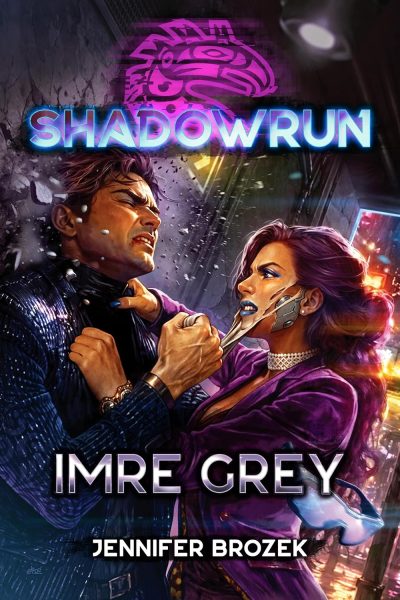
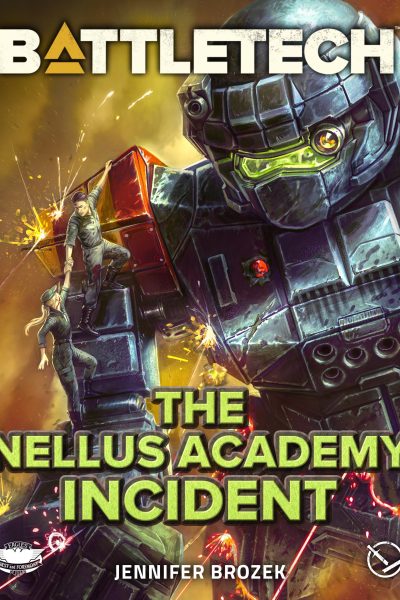
Jennifer Brozek is a multi-talented, award-winning author, editor, and media tie-in writer. She is the author of Never Let Me Sleep and The Last Days of Salton Academy, both of which were nominated for the Bram Stoker Award. Her YA tie-in novels, BattleTech: The Nellus Academy Incident and Shadowrun: Auditions, have both won Scribe Awards. Her editing work has earned her nominations for the British Fantasy Award, the Bram Stoker Award, and multiple Hugo Awards. She won the Australian Shadows Award for the Grants Pass anthology, co-edited with Amanda Pillar. Jennifer’s short form work has appeared in Apex Publications, Uncanny Magazine, Daily Science Fiction, and in anthologies set in the worlds of Valdemar, Shadowrun, V-Wars, Masters of Orion, Well World, and Predator.
Jennifer has been a full-time freelance author and editor for over seventeen years, and she has never been happier. She keeps a tight schedule on her writing and editing projects and somehow manages to find time to teach writing classes and volunteer for several professional writing organizations such as SFWA, HWA, and IAMTW. She shares her husband, Jeff, with several cats and often uses him as a sounding board for her story ideas. Visit Jennifer’s worlds at jenniferbrozek.com or her social media accounts on LinkTree.